
Open Your Home. Change a Cat’s Future.
Every cat we rescue has one thing in common before they can move on to a permanent home.
They need a safe place to stay.
A foster home gives injured cats time to heal, abandoned pets a chance to decompress, and kittens a safe place to grow. Some community cats need temporary indoor recovery after surgery before they can safely return to the colony they came from. Others simply need a safe place to stay while they wait for an adoptive home.
Without foster families, many cats simply have nowhere to go.
You don’t need previous rescue experience to become a foster volunteer. If you can provide a safe space, food, water, and a little patience, we’ll help you with the rest.
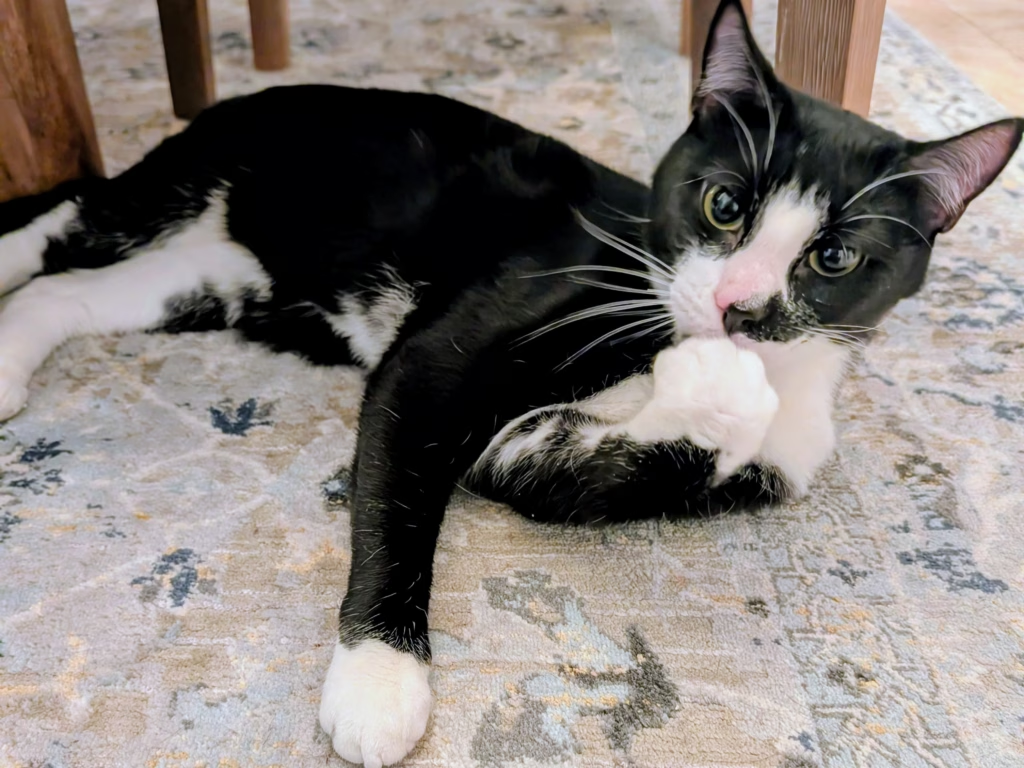
Why Foster Homes Matter
Every week, we receive calls about cats that need help.
Some are friendly cats that have been abandoned outdoors.
Some are recovering from injuries or surgery.
Some are kittens that are too young to be adopted.
Some simply need a quiet place to recover before they can safely return outdoors.
The question isn’t whether these cats deserve help.
The question is whether we have somewhere for them to go.
Every available foster home allows us to say “yes” to another cat.
What Does Fostering Actually Look Like?
One of the biggest misconceptions about fostering is that it requires special training or that it will completely disrupt your life.
In reality, every foster placement is different.
Some cats stay for only a few weeks.
Others may need a little longer while they recover or wait for adoption.
Many spend much of the day sleeping while you go about your normal routine.
We’ll work with you to find a foster placement that matches your experience, your home, your schedule, and your comfort level.
You won’t be expected to take every cat.
The goal isn’t simply to find a foster home.
It’s to find the right foster home.
What Types of Cats Need Foster Homes?
Not every foster experience is the same.
Some volunteers enjoy caring for playful kittens.
Others prefer calm adult cats.
Some are comfortable helping a cat recover after surgery.
Others simply want to provide a quiet room for a friendly cat until an adoptive family is found.
We’ll help determine what type of foster placement is the best fit for you.
You’re Not Doing This Alone
One of the most common concerns we hear is:
“What if I don’t know what I’m doing?”
That’s completely normal.
Many of our foster volunteers had never fostered a cat before.
We’ll explain what to expect, answer your questions, help coordinate veterinary care when needed, and provide guidance throughout the foster period.
You’re opening your home.
We’re your partner throughout the process.
Questions We Hear Most Often
Is Fostering Right for You?
You don’t need to have all the answers today.
If you’ve been thinking about fostering—even if you’re still unsure—we’d love to talk with you.
A conversation doesn’t obligate you to foster.
It simply gives you the opportunity to learn more, ask questions, and decide whether fostering is the right fit for you and your household.
Become a Cat Foster Volunteer
Every foster home expands our ability to help cats in our community.
Sometimes the difference between a cat remaining outside and getting a second chance is simply whether someone has a spare bedroom, office, or bathroom available for a few weeks.
If this sounds like something you may be able to do, we’d love to hear from you.